Simulcast ob BLACK GATE
In August 2025, we hailed the emergence of a second Chain Story project championed by Michael A. Stackpole. This is a Sword & Sorcery-focused, contagious set of connected (“chained”) stories.
Each is:
- A standalone tale
- Readable in any order
- Free to read! (for at least three months from its posting date)
- Interconnected via a theme involving a Crown
We round up groups every several weeks, but check the Chain Story website for the latest. Here we highlight the latest set of five, Episodes 29-32.
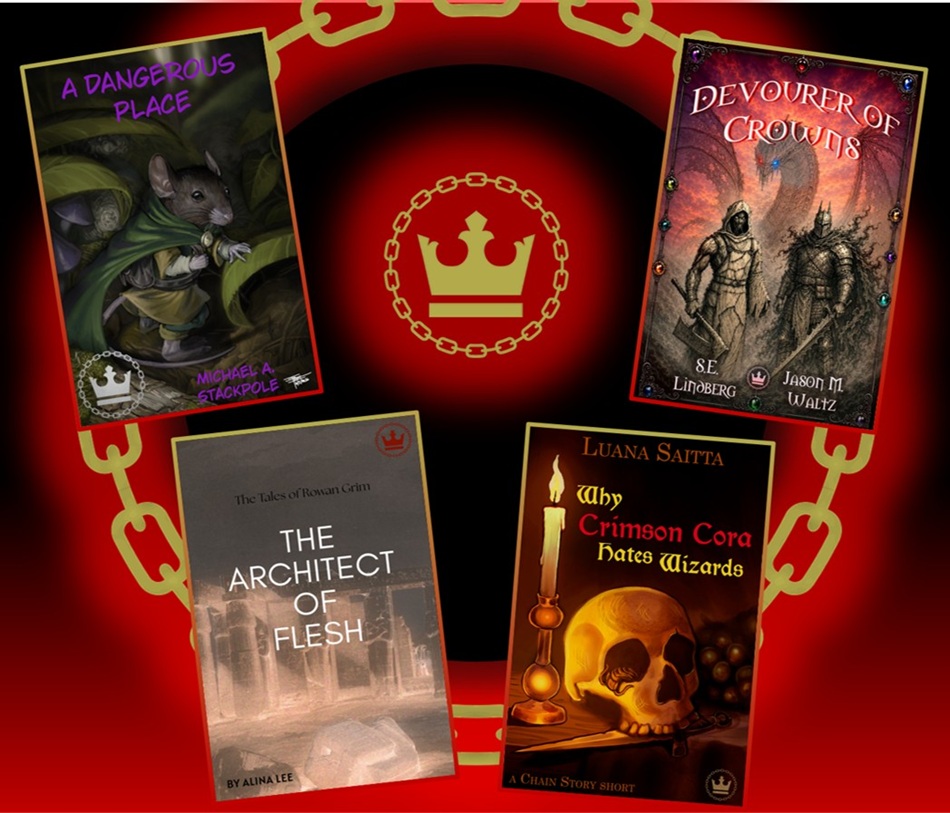
#32 "Devourer of Crowns" by Jason M. Waltz and S.E. Lindberg
Lord Direk struggles to contain the shadow cursing his body when the meddling of unknown entities brings him into contact with the suspicious Doktor Grave. Their shared fascination with the jewels of Tarru-syn may offer Direk deliverance—or be his damnation. Can these strangers from different worlds dare to rely on each other long enough to defeat their common enemy? Will alchemy and will-power be enough to save them from being devoured by the treasures they seek?"
31 Why Crimson Cora Hates Wizards Luana Saitta
The Ionaian Basin is atwitter with the capture of its scourge, Crimson Cora! Is this the final hour for the dreaded pirate queen? Brought low by the ruthless commander Pallidus, she is left to die upon the shores of a desolate island. Now the tide is rising and demons from the depths hunger for flesh! How will she get outta this pickle, before she becomes a seaside lunch?
30 The Architect of Flesh Alina Lee
There are terrible things waiting in the Badlands.Rowan Grim returns. In this tale, she finds herself tracking down a workshop of an old enemy of her lost people, the demon known as the Architect of Flesh. What she finds there is more than she expected, and answers to questions she'd not thought to ask. There is more to what she has become than she assumes.
29 A Dangerous Place Michael Stackpole
Myrk is a mouse who spends most of his time trying not to be seen. However, a mission he sees as urgent causes him to leave The Academy and plunge headlong into a forest which, as all mice know, is a dangerous place for a mouse. And dangerous indeed it proves, as an act of kindness reveals him to one of the deadliest enemies a mouse could ever meet.
Previous Black Gate posts have chronicled groups of the growing chain:
- The Chain Story 2 – Sword and Sorcery – Episodes 1 – 3 (Aug 2025)
- The Chain Story 2 – Sword and Sorcery – Episodes 4 – 8 (Oct 2025)
- The Chain Story 2 – Sword and Sorcery – Episodes 9 – 13 (Nov 2025)
- The Chain Story 2 — Sword and Sorcery – Episodes 14 – 18 (Feb 2026)
- The Chain Story 2 — Sword and Sorcery — Episodes 19-23 (May 2026)
- The Chain Story 2 — Sword and Sorcery — Episodes 24-28 (May 2026)
Entry | Chain_Post_Date | Story(Link to Free version) | Author(s) | Abstract |
| 32 | August 19, 2026 | Devourer of Crowns | Jason M. Waltz and S.E. Lindberg | Lord Direk struggles to contain the shadow cursing his body when the meddling of unknown entities brings him into contact with the suspicious Doktor Grave. Their shared fascination with the jewels of Tarru-syn may offer Direk deliverance—or be his damnation. Can these strangers from different worlds dare to rely on each other long enough to defeat their common enemy? Will alchemy and will-power be enough to save them from being devoured by the treasures they seek? |
| 31 | August 5, 2026 | Why Crimson Cora Hates Wizards | Luana Saitta | The Ionaian Basin is atwitter with the capture of its scourge, Crimson Cora! Is this the final hour for the dreaded pirate queen? Brought low by the ruthless commander Pallidus, she is left to die upon the shores of a desolate island. Now the tide is rising and demons from the depths hunger for flesh! How will she get outta this pickle, before she becomes a seaside lunch? |
| 30 | July 22, 2026 | The Architect of Flesh | Alina Lee | There are terrible things waiting in the Badlands.Rowan Grim returns. In this tale, she finds herself tracking down a workshop of an old enemy of her lost people, the demon known as the Architect of Flesh. What she finds there is more than she expected, and answers to questions she'd not thought to ask. There is more to what she has become than she assumes. |
| 29 | July 8, 2026 | A Dangerous Place | Michael Stackpole | Myrk is a mouse who spends most of his time trying not to be seen. However, a mission he sees as urgent causes him to leave The Academy and plunge headlong into a forest which, as all mice know, is a dangerous place for a mouse. And dangerous indeed it proves, as an act of kindness reveals him to one of the deadliest enemies a mouse could ever meet. |
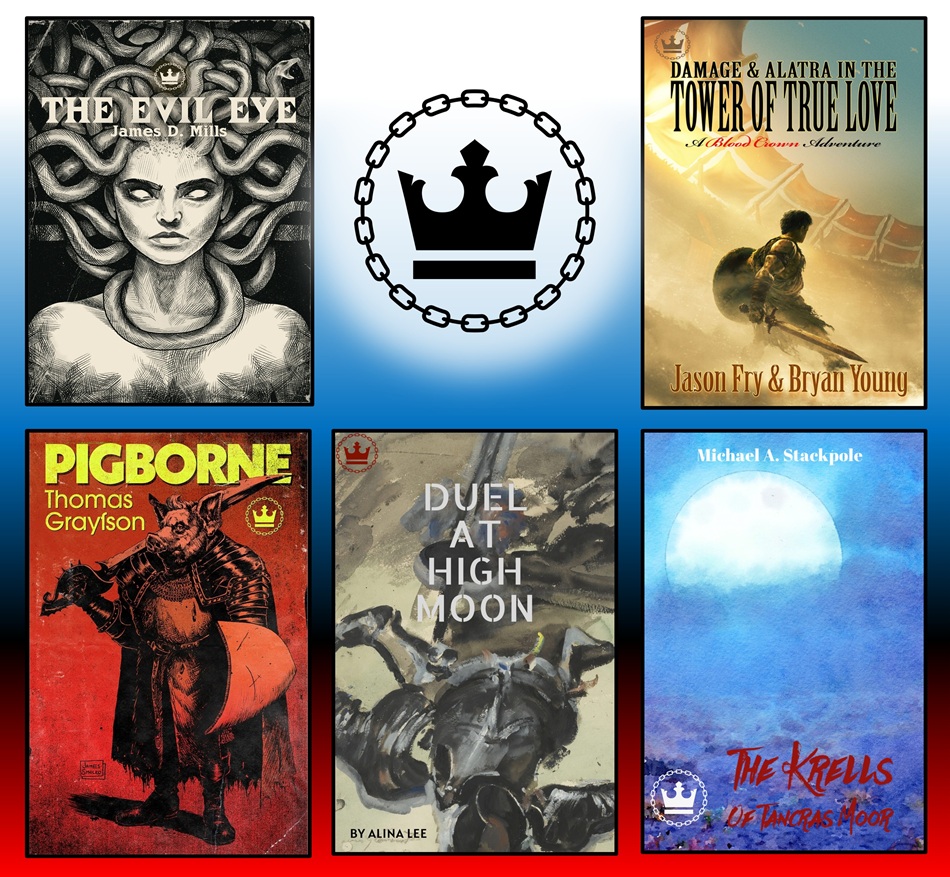
| 28 | June 24th, 2026 | Damage And Alatra In The Tower of True Love | Bryan Young, Jason Fry, Luke Chmilenko | Damage and Alatra are opposites in every way. thrown together as a gladiator pair and bound by the interaction of their talents so that they can't be more than four paces apart. Together, they must navigate the perils of the Blood Crown and a dangerous world marked by brutality and sorcery. In the The Tower of True Love, they get a break from the gladiator pits and have been loaned out to protect a traveling caravan. In their travels, they stumble across a mysterious tower that could prove a vulnerability to their employ and are forced to investigate. They get far more than they bargained for when they discover the tower is cursed and they must complete a series of mystical tests to survive. |
| 27 | June 10, 2026 | The Krells of Tancras Moor | Michael Stackpole | Enemies destroyed Black Morgan of Aldare’s life through deception and guile. They tricked him into shattering everything, everyone, he loved. Their only failure was in letting him live. And now he is stalking them, intent on putting an end to their evil. |
| 26 | May 27, 2026 | The Evil Eye | James D. Mills | Gora Younger, the First Son of the Chieftain is exiled from his village in the Great Cave after vainly pursuing his betrothed, who left him to live beneath the sky. After years sealed away in the dark, Gora is summoned home to investigate a demonic presence that has taken the tribe’s best warriors and afflicted the Chieftain with a strange malady, slowly turning his flesh to stone. Diving into uncharted depths alongside a healer from a strange city, Gora must dispel a curse that has long shackled his people… and his soul. |
| 25 | May 27, 2026 | PIGBORNE | Thomas Grayfson | Captain Malion is one of the last defenders of Genlina, an animal kingdom reduced to feral instinct by the sapphire of Tarru-Syn. As his mission into the Nexus Dimension unravels and his comrades are irrevocably transformed, he must decide what he is willing to sacrifice to reclaim his world. A grimdark animal fantasy in the spirit of Redwall, Pigborne is a brutal tale of loyalty and ruin. |
| 24 | May 13, 2026 | Chain Story Project: Duel at High Moon | Alina Lee | Rowan Grim’s fearful hunger is sated, at least for a bit, so her only desire is for a hot meal, a warm bath, deep sleep and perhaps a dream. Galant’s Gultch looks like the town that can provide all that and even a little whiskey. But there are forces in the town which see her as something more than a weary traveler. They think she will sate a hunger they have. And, under the Scarlet Moon, the truth of the matter will be revealed. |
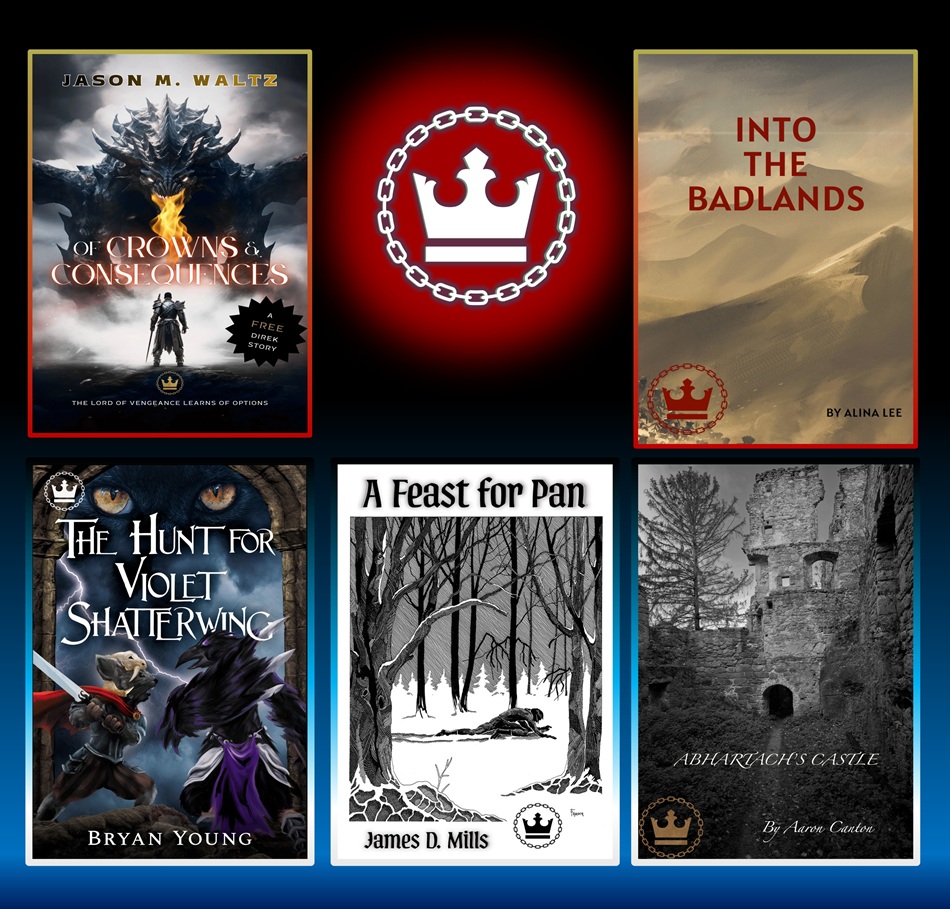
| 23 | March 25, 2026 | A Feast For Pan | James D. Mills | IN THE WASTES, ALL ARE FODDER FOR PAN. In a return to the world of SOIL and Ashen Rider, Hromgir and Arvid of Clan Sparrow are on the run after a raid gone wrong. Braving the frozen wastes of the northern coast, they must reach the mountain pass to escape the Wystran riders close on their heels. Hiding from the riders, they take shelter in the depths of a strange cave, unearthing otherworldly horrors better left buried.... |
| 22 | March 11, 2026 | Abhartach’s Castle | Aaron Canton | A trio of student witches head off on a dangerous adventure to obtain a powerful artifact—aiming to retrieve it and keep it out of the hands of sinister forces. Unexpectedly they meet opposition in the form of a classmate they’d once all considered a friend, but who has become a most dangerous foe. |
| 21 | February 25, 2026 | Into The Badlands | Alina Lee | Rowan Grim’s world is one which is long on places you don’t want to travel to, and few people return from. But what is out there draws her, and she willingly embraces the challenges which have devoured so many others. |
| 20 | February 9, 2026 | The Hunt For Violet Shatterwing | Bryan Young | Now returned to Nightfall Forest, and in the company of the fox bard Ashley, Pip finds the hamlet of Riveroak ablaze. The mouse knight, his war cat, and companion race to quench the fires and hunt the leader of the crow cult, intent on putting an end to her evil. |
| 19 | January 28, 2026 | Of Crowns & Consequences | Jason M. Waltz | Direk, wielder of the magickal sword Retribution, has been dispatched to destroy an old enemy at the behest of his King. In his pursuit he encounters a newly awakened power which challenges his knowledge of the world, and threatens to up end all he knows to be true. |
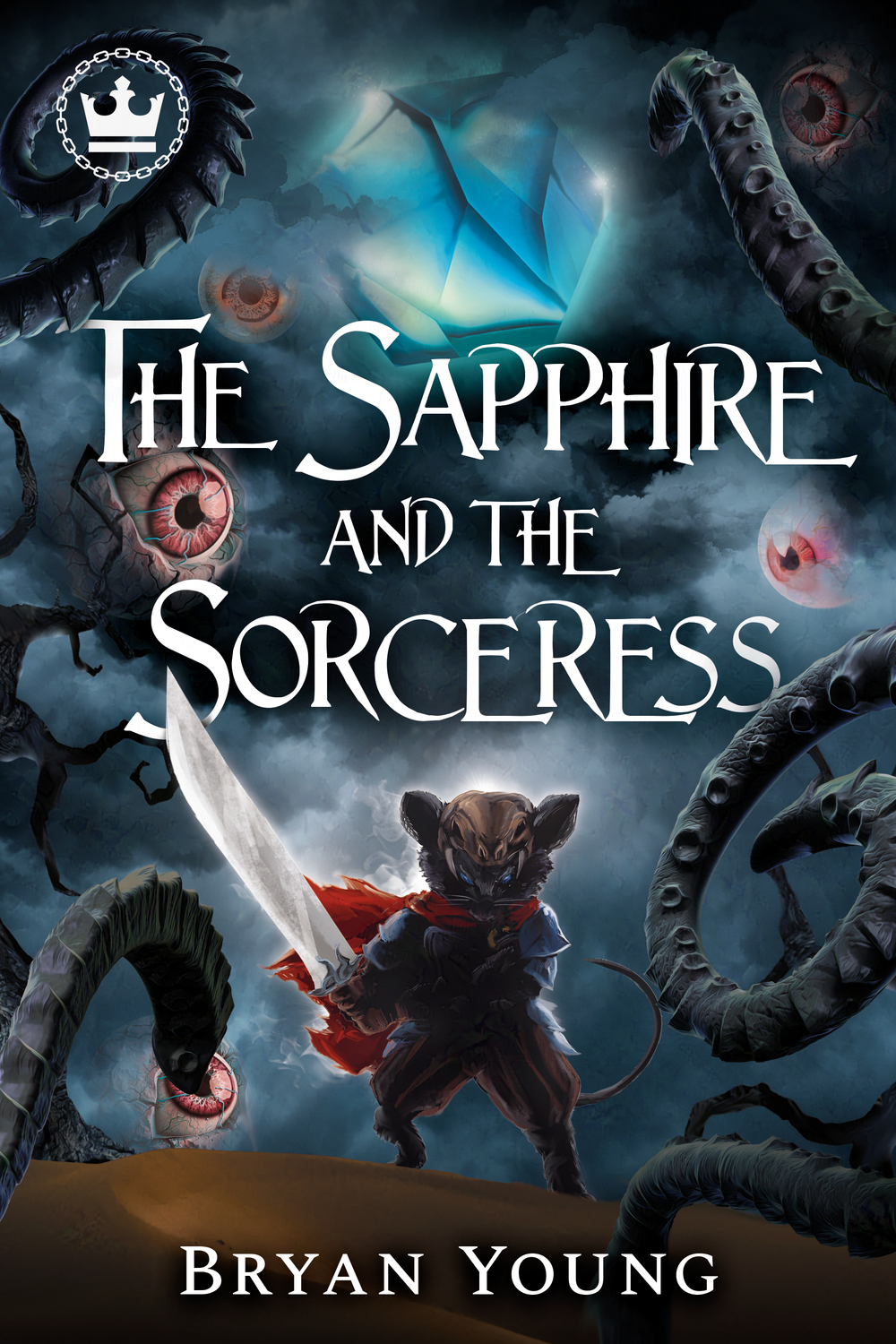
| 18 | January 19, 2026 | The Sapphire and the Sorceress | Bryan Young | As with all good heroes, Pip does not shrink from danger and adventure. Still, there are times when it would be good to relax at home. But Pip is far from home, and is searching for a powerful sorceress who can help him on his way. |
| 17 | January 14, 2026 | Terror Above Icehenge | Malcolm T. North | To reach her, however, he’ll have to venture through the Chaos Realm and, as every true hero knows if you undertake that journey lightly, it will end quickly. But Pip has no choice, and therein our adventure begins. |
| 16 | December 31, 2025 | Demonfire: A Tale of Shintaro Oba | C. L. Werner | A forbidden ritual conducted in secret, bathed in blood and death enables a demon to grasp unimaginable power—the power to destroy all enemies and raise himself above all others. |
| 15 | December 24, 2025 | In The Land of the Giants, | Bryan Young | A Samurai, whose duty calls for him to hunt down such a creature. A destiny he must pursue even as the world burns around him. |
| 14 | December 10, 2025 | Blight | Katherine Monasterio | Forest Ranger Hazel Boncliff is a Green Speaker, a person with the magical ability to commune with plants. When the king summons Hazel and her assistant to the capital to heal the strange blight affecting his hunting grounds, she’s reluctant to help—least of all because he’s insisting his inexperienced secretary go along for the journey. But with a reward she can’t refuse and the blight’s effects more harrowing by the moment, she’ll take all the help she can get. |
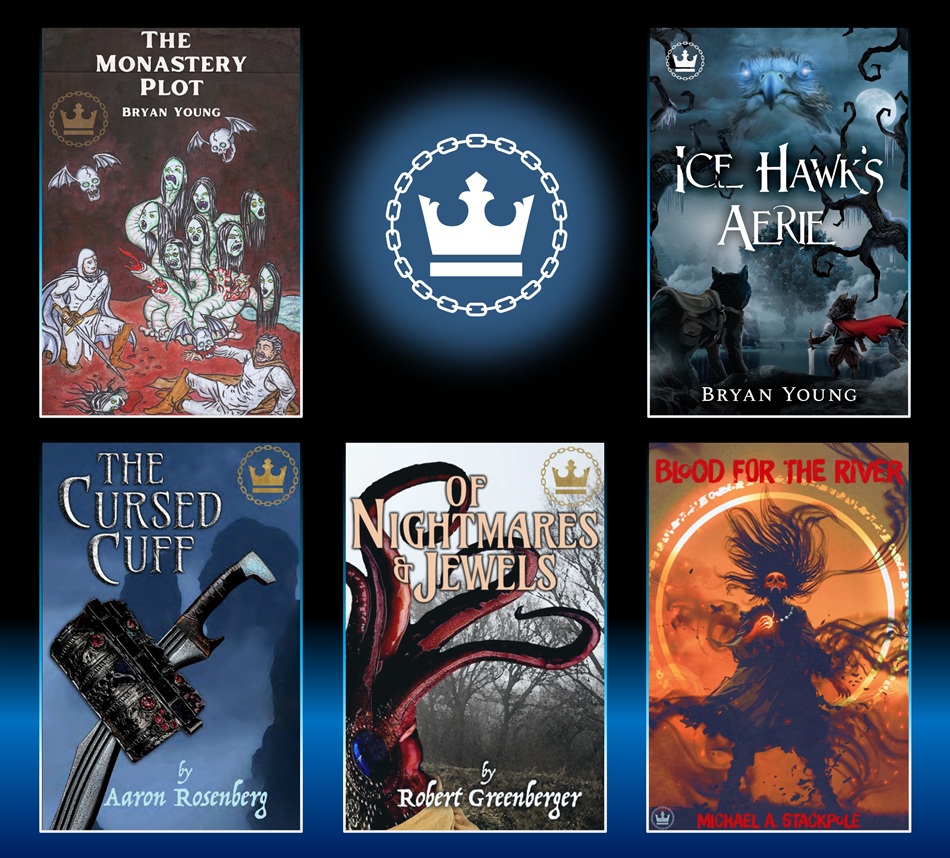
| 13 | November 26, 2025 | Ice Hawk’s Aerie, | Bryan Young | A chance meeting in the dark forest. A tale of woe and injustice. Pip Strongpaw, the last of the fabled Great Catriders, must once again wield the runed-sword Feathersbane, to end the chilling menace threatening to destroy the hamlet of Riveroak. A menace of sorcerous origins against which even the bravest of heroes may not prevail. |
| 12 | November 12, 2025 | Blood for the River | Michael Stackpole | Chased into a swamp by homicidal cultists, Kellach and Serinna encounter a fire mage who saves their lives, and then leads them on an adventure that is sure to get them killed. |
| 11 | October 14, 2025 | Of Nightmares & Jewels | Robert Greenberger | Something drew the mage onward, always toward the northwest, through restless evenings and dark dreams of ill portent. Yet when Jareth’s traveling companion, the swordswoman Talin, asks him why, he has no idea. And then they reached a tiny town at the edge of nowhere, wherein lurked an evil with roots sunk deep in times beyond remembering; an evil that has chosen their visit as a time to awaken. |
| 10 | October 14, 2025 | The Cursed Cuff | Aaron Rosenberg | She came to them spinning a tale of woe. An army of undead lay siege to the Manor she called home. She had barely escaped and sough adventurers brave enough to free her people. But to do that Birr Blackjaw and his companions would have to wrest an ancient artifact from the hands of a cult leader who had his own army, and a hellish pet none could hope to defeat. |
| 9 | October 1, 2025 | The Monastery Plot | Bryan Young | Shield Maiden and legendary sleuth Sister Agatha, accompanied by her faithful initiate, Brother Dominguez, sought to enjoy peace and quiet at the Monastery of St. Maryam.Despite their desires, they soon find themselves investigating twin murders. Murders which become all that much more bizarre when the name Tarru-Syn turns up, and their search leads them into the very bowels of the earth, to face a foe from beyond their reality. |
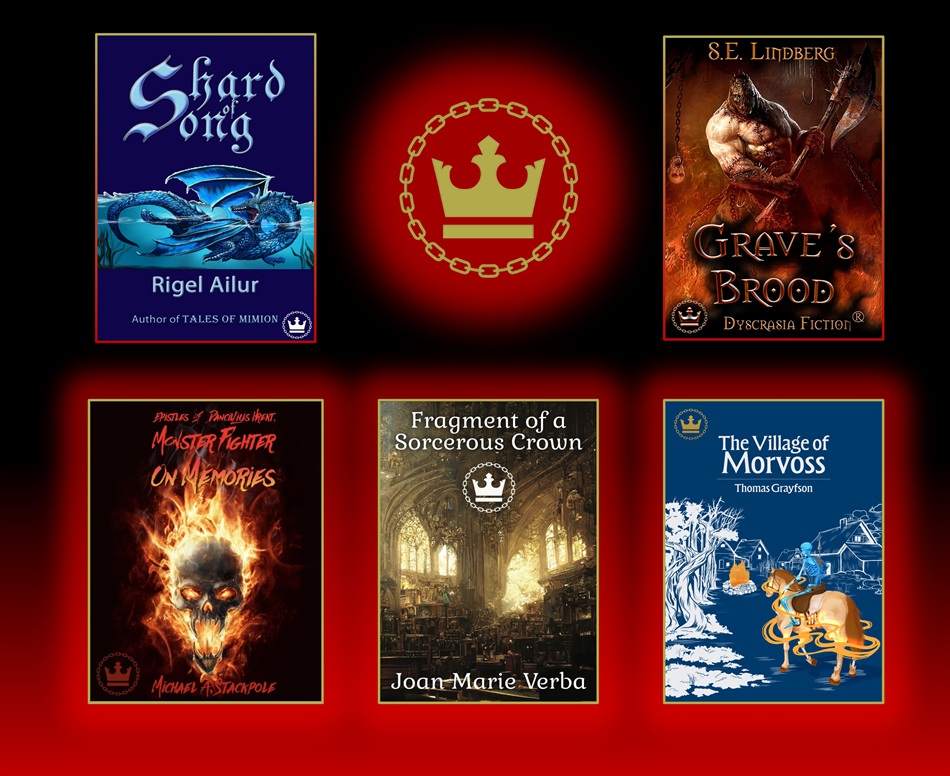
| 8 | September 24, 2025 | On Memories | Michael Stackpole | Dancillius Hrekt is fairly new to the world of Monster Fighting. All he wants to do is to make a good impression with his peers. And all they want is for him and his best friend to die. |
| 7 | September 10, 2025 | The Village of Morvoss | Thomas Grayfson | In this new Kavion adventure, our tormented knight clings to the last threads of family and sanity as he navigates the mysterious Village of Morvoss. Haunted by fractured memories, he must confront the darkness around him—and within. |
| 6 | August 27, 2025 | Fragment of a Sorcerous Crown | Joan Marie Verba | In this tale from the Chronicles of the Library of Sorcery, the sorcerers investigate a dangerous magical artifact of mysterious origin. Can the sorcerers uncover the truth?Sorcerer Serena is called to investigate an enormous, carnivorous plant. She finds that a mysterious magical artifact is behind the phenomenon. To find out where the artifact came from and what its properties might be, she consults the Library of Sorcery, where she uncovers the answers, but not on the Library shelves. Can the artifact be banished from the sorcerous regions before it becomes a more deathly threat? |
| 5 | August 13, 2025 | Grave's Brood | S.E. Lindberg | Doktor Grave sends Brood to recover a crown from the Red Orchard, only for Brood to find it is the source of a bloody plague caused by Grave’s experiments. Facing vampiric plants and their loyal clan, Brood must confront his past and question whether he can trust Grave or escape the nightmare himself. |
| 4 | July 28, 2025 | Shard of Song | Rigel Ailur | Two wizards search desperately for a way to stave off a vicious magical-musical attack before the dragons succumb. A powerful relic ancient beyond memory calls to them, but do they dare use it? |
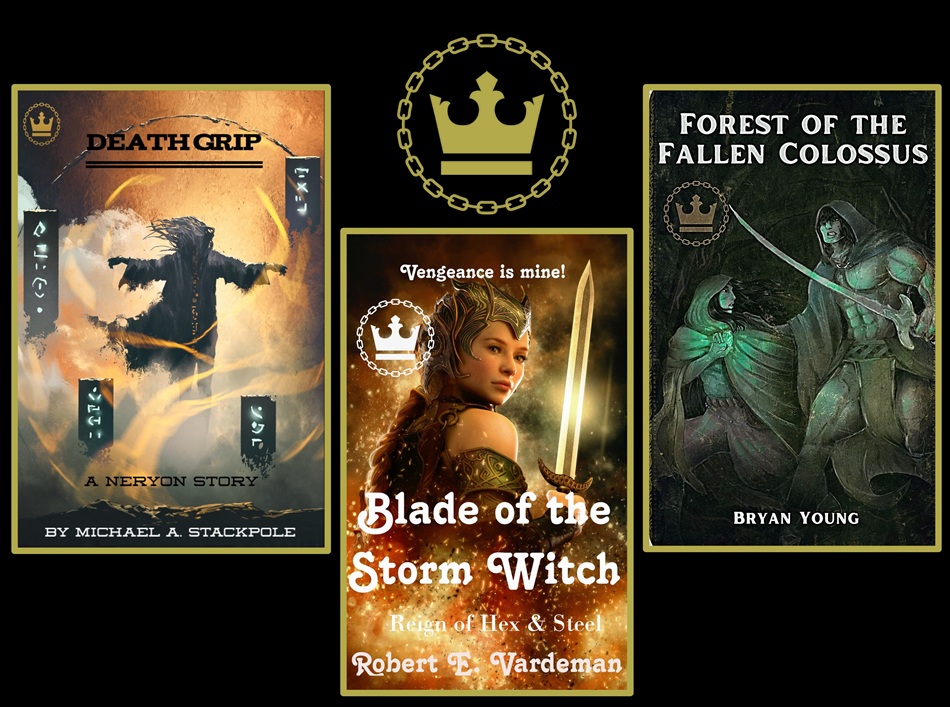
| 3 | July 16, 2025 | Forest of the Fallen Colossus | Bryan Young | A dying robber hands Laila and Zaki a mysterious artifact in the middle of a fae-haunted wood. “Danger,” the robber manages before dying. Suddenly sister and brother find themselves safeguarding an unwanted gift—on the run for their lives in the Forest of the Fallen Colossus. |
| 2 | July 3, 2025 | Death Grip | Michael Stackpole | The man hadn’t died easily.A smoking hole sat where his heart should have been. Terror twisted his features, and he clutched an emerald reeking of magick as if would somehow save him. Neryon and Magistrate-Martial Logan find themselves in a race to find the killer before he has a chance to harvest more victims. But, with the amount of power used on his first target, there was a big gulf between finding and stopping; and no guarantee he wouldn’t kill them, too. |
| 1 | July 3, 2025 | Blade of the Storm Witch | Robert E. Vardeman | Her vengeance became elemental! The Conqueror-King's minion murdered her pirate husband. The Lady Rennata was condemned to follow him into a watery grave—until wind and wave swept her to a magical blade that commands all of Nature. |
S.E. Lindberg is a Managing Editor at Blackgate.com, regularly reviewing books, interviewing authors on ‘Beauty & Art in Weird-Fantasy Fiction’, and running Dark Muse News. He has taken lead roles organizing the Gen Con Writers’ Symposium (2021-2023) and the Goodreads Sword & Sorcery Group; he even interned for Tales from the Magician’s Skull magazine and is an Assistant Editor for Battleborn magazine. As for crafting stories, he has contributed eight entries across Perseid Press’s Heroes in Hell and Heroika series, and has an entry in Weirdbook Annual #3: Zombies. He independently publishes novels under the banner Dyscrasia Fiction®; short stories of these have appeared in Whetstone and Swords & Sorcery online magazine, Rogues In the House Podcast’s A Book of Blades (Vol. I and Vol. II), DMR’s Terra Incognita, Tales From the Magician’s Skull, Savage Realms Magazine, and Michael Stackpole’s S&S Chain Story 2 Project.


.jpg)